 USD
USD  EUR
EUR  CHF
CHF  ALL
ALL  SAR
SAR  AED
AED  EGP
EGP  PHP
PHP  NPR
NPR  THB
THB  BRL
BRL  INR
INR  TRY
TRY  IDR
IDR  JPY
JPY  KRW
KRW  GBP
GBP  AUD
AUD  CAD
CAD  RSD
RSD  VND
VND  UZS
UZS  TWD
TWD  HKD
HKD  MOP
MOP  IRR
IRR  AFN
AFN  MXN
MXN  CNY
CNY  MMK
MMK  RUB
RUB  BDT
BDT  KHR
KHR  SGD
SGD Zen Artisan Blogs
Aquamarine: Meaning, History, Properties & Why It’s Trending
- Jan.23, 2026 13:34:42
- 0 Comments
In the vibrant world of gemstones, there exists a crystal whose hue mirrors the calm tropical sea—clear, azure, as if it has captured all the tranquility and healing of the world. Legend has it that it is the treasure of mermaids, the "Tears of the Divine" scattered on the seabed. Since ancient times, it has been regarded by sailors as an amulet to calm storms and bring peace. This is aquamarine. So, this embodiment of the "Ocean Goddess"—is it a crystal or a gemstone? And what magical cultural and metaphysical meanings does it hold?
"Tears of the Divine": Is Aquamarine a Crystal or a Gemstone? What Metaphysical Meanings Does It Carry?
I. Identity Clarification: A Noble Gemstone of the Beryl Family
Crystal vs. Gemstone
Aquamarine’s "Family Tree"
II. Source of Energy: Five Elements (Water) & the Healing Power of the Ocean
The "Stone of Wisdom" for Communication—Aligning with the Throat Chakra
The "Healing Stone" for Emotions—Calming Inner "Storms"
The "Protective Stone" for Travelers—Ancient Legends of "Tears of the Divine"
Aquamarine 101: Key Properties That Make It Unique
A Journey Through Time: Aquamarine’s Rich History
Symbolism & Meaning: Why Aquamarine Resonates Today
Perceived Benefits: From Wellness to Style
How to Wear & Care for Aquamarine to Maximize Its Potential
Wearing Tips
Ideal Wearers
Care & Cleansing
Why Aquamarine Is Trending
Final Thoughts: Why Aquamarine Deserves a Spot in Your Collection
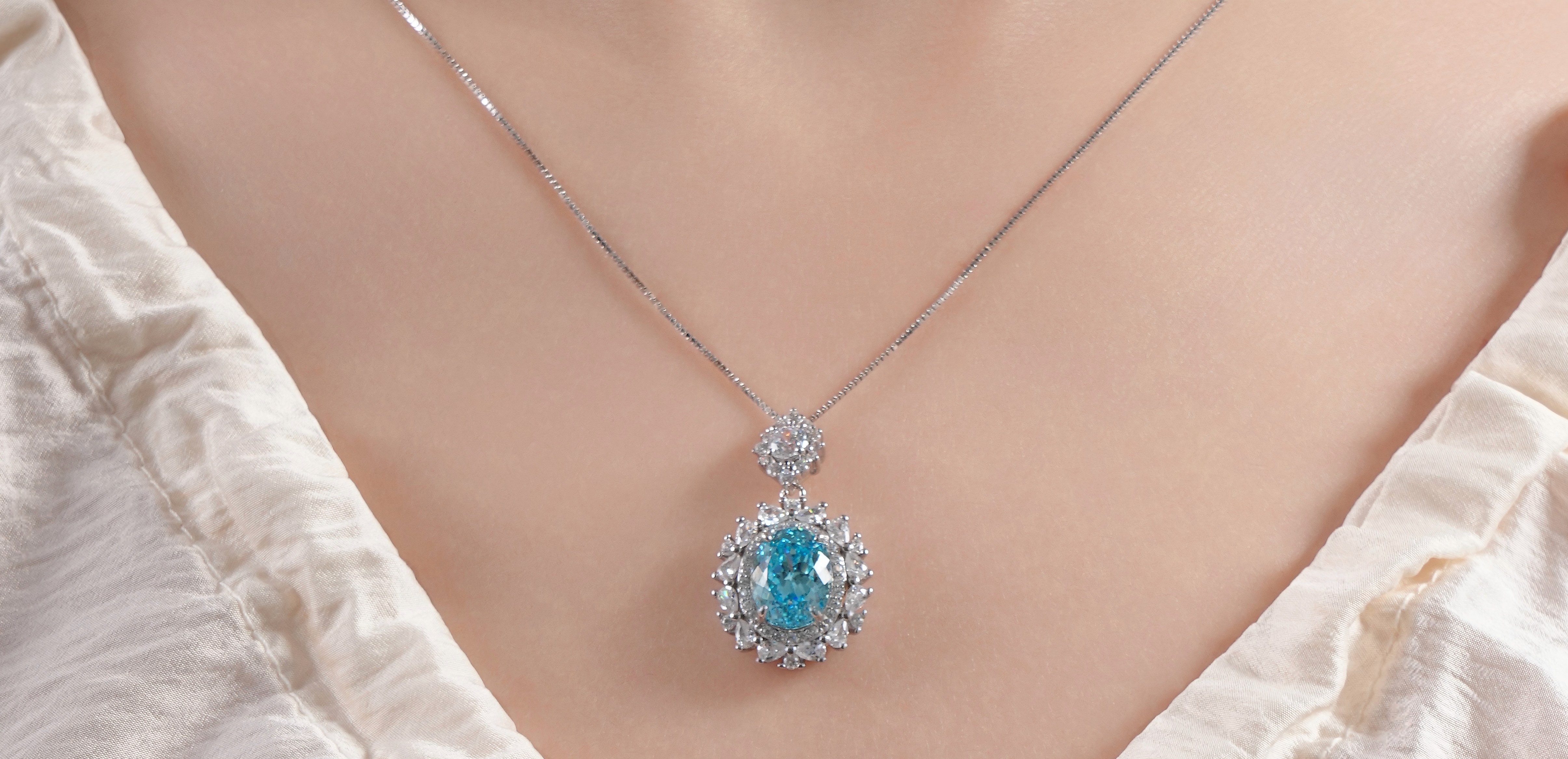
There’s something inherently enchanting about the poetic name “aquamarine”—and a subtle confusion it naturally sparks. With its glowing transparency and soft, ocean-kissed tones, it blurs the line between quartz and gemstone. To the naked eye, it has the translucent purity of crystal, yet radiates the elegance and fiery sparkle that mark true gemstones. This gentle uncertainty pushes us to dig into its real identity and deeper metaphysical meanings, blending gemological facts with age-old traditional wisdom.
I. Identity Clarification: A Noble Gemstone of the Beryl Family
First, let’s formally define aquamarine from a scientific perspective.
- Crystal: In mineralogy, it specifically refers to crystals of "quartz," whose main chemical composition is silicon dioxide (SiO₂). Common crystals like clear quartz, amethyst, and citrine all belong to this family.
- Gemstone: A broader term encompassing all beautiful, hard, rare mineral single crystals that can be used in jewelry making.
Aquamarine’s chemical composition is beryllium aluminum silicate (Be₃Al₂Si₆O₁₈), placing it in the gemstone family known as "beryl." This family is truly distinguished, as its most famous member is the renowned "emerald"!
- Emerald: Displays a rich green hue due to traces of chromium or vanadium.
- Aquamarine: Boasts enchanting sky blue or sea blue tones thanks to minute amounts of divalent iron ions (Fe²⁺).
- Morganite: Features delicate pink shades from manganese content.
As a member of the beryl family and a "sister" to emerald, aquamarine is a genuine "gemstone," not ordinary quartz. It is often mistaken for crystal because its crystals are typically purer and more transparent than emeralds, visually resembling quartz’s texture.
II. Source of Energy: Five Elements (Water) & the Healing Power of the Ocean
In traditional Fengshui Five Elements metaphysics, all things possess a five-element attribute. With its pure blue color, aquamarine is undoubtedly classified as a representative gemstone of the "Water" element.
In the Five Elements, "Water" governs wisdom, communication, flow, and healing. Aquamarine’s metaphysical meanings revolve closely around these traits.
The "Stone of Wisdom" for Communication—Aligning with the Throat Chakra
- Metaphysical Meaning: Aquamarine’s clear blue energy corresponds to the "Throat Chakra" in the body’s seven chakras, which governs communication, expression, and creativity.
- Perceived Benefits: For those who struggle with words, feel nervous in public, or work in professions requiring strong communication skills—such as salespeople, teachers, content creators, or lawyers—wearing aquamarine is believed to:
- Enhance expression: Make speech smoother, more organized, and persuasive.
- Resolve communication barriers: Help articulate true thoughts clearly and calmly, reducing conflicts caused by misunderstandings.
- Ignite creative inspiration: For creators, it unblocks thinking and lets inspiration flow like a spring.
The "Healing Stone" for Emotions—Calming Inner "Storms"
- Metaphysical Meaning: The gentle nature of "Water" can counteract "Fire." Aquamarine’s energy, like the deep, serene ocean, calms the "unreasoning anger" fueled by anxiety, frustration, or fear.
- Perceived Benefits: For those with an impulsive temperament, volatile emotions, or who are under intense stress, wearing or holding aquamarine during meditation is said to:
- Bring peace: Its cool energy quickly lowers emotional "temperature," restoring calm and balance.
- Purify negative energy: Just as seawater washes away impurities, aquamarine is believed to cleanse negative energy attached to one’s aura and heal past emotional wounds.
The "Protective Stone" for Travelers—Ancient Legends of "Tears of the Divine"
- Folklore: In Western ancient tales, aquamarine was a treasure adorned by mermaids, formed from their tears shed during storms. Thus, it was endowed with the sacred attribute of "essence of the ocean."
- Perceived Benefits: Since ancient Rome, sailors have believed that wearing aquamarine would invoke the protection of sea gods, calm storms, and ensure safe voyages. Today, it remains known as "the best amulet for travelers," especially suitable for those who frequently travel for work, engage in transportation, or embark on journeys, to pray for a smooth trip.
Aquamarine 101: Key Properties That Make It Unique
Beyond its cultural significance, let’s break down the gemological basics. Aquamarine is a variety of beryl—a silicate mineral containing beryllium and aluminum—sharing its mineral family with emeralds, morganites, and heliodor. What sets it apart? Its stunning color palette, ranging from pale sky blue to deep teal-blue, all thanks to trace amounts of iron (Fe²⁺) in its crystal structure. The most prized specimens boast intense, uniform blue hues with exceptional clarity—qualities that make them stand out in both minimalist and statement jewelry designs.
Beyond its beauty, aquamarine has practical properties that add to its allure: it boasts excellent toughness, a high melting point, and a distinct conchoidal fracture. These traits make it ideal for everyday wear, whether set in a dainty necklace, a stackable ring, or a pair of drop earrings—perfect for the modern consumer’s demand for "jewelry that works as hard as they do."
When it comes to origins, the world’s finest aquamarines hail from Brazil’s Minas Gerais state, where some of the largest specimens in history have been found—including a 110.5-kilogram crystal discovered in 1910. Other notable sources include Russia, Madagascar, Tanzania, and the United States (Colorado and Wyoming). Each region’s stones carry subtle variations in color intensity, adding to aquamarine’s collectibility.
A Journey Through Time: Aquamarine’s Rich History
Aquamarine’s story is as deep as the oceans it’s named after (its moniker comes from the Latin aqua marina, meaning "sea water"). Its history dates back to ancient Greece and Rome, where it was more than just a gem—it was a powerful talisman. Sailors carried aquamarine amulets to calm stormy seas and ensure safe passage, earning it the nickname "Sailor’s Stone." Ancient writers even claimed the gem was forged from mermaid tears, linking it to the ocean’s mystical powers.
In the medieval era, aquamarine took on new roles: polished beryl (including aquamarine) was used as early magnifying lenses, giving rise to words like "brille" (German for "glasses"). It was also believed to cure eye ailments when soaked in water—a belief rooted in its association with clarity. By the Renaissance, aquamarine had become a favorite of nobility; European royals adorned themselves with the gem to symbolize power and protection.
Modern history cemented aquamarine’s royal status. In 1953, Brazil gifted Queen Elizabeth II a set of aquamarine jewelry for her coronation—pieces she later had redesigned into the iconic tiara still worn at state events. More recently, Meghan Markle wore an aquamarine ring (once belonging to Princess Diana) on her wedding day, sparking a global surge in searches for "aquamarine engagement rings." This royal seal of approval has kept aquamarine in the spotlight for decades.
Symbolism & Meaning: Why Aquamarine Resonates Today
For modern consumers—especially Gen Z and millennials—jewelry is more than adornment; it’s a form of self-expression. Aquamarine’s symbolic meanings align perfectly with today’s values: calm, clarity, courage, and authentic communication. As the official birthstone for March, it’s a personal and thoughtful gift for anyone born in that month, symbolizing the fresh start of spring.
In Western culture, aquamarine is closely tied to emotional wellness. It’s seen as a stone that eases stress, calms anxiety, and promotes mental clarity—traits that resonate in our fast-paced world. It’s also a symbol of sincerity and trust, making it a popular choice for engagement rings and anniversary gifts (it’s the 19th wedding anniversary gem).
Social media has amplified these meanings, with influencers and wellness bloggers highlighting aquamarine as a "go-to" gem for mindfulness and self-care. Hashtags like #AquamarineVibes, #MarchBirthstone, and #CalmStone have millions of views on Instagram and TikTok, proving that aquamarine’s symbolism is as relevant as ever.
Perceived Benefits: From Wellness to Style
Aquamarine has long been associated with a range of positive effects—many of which align with today’s wellness trends.
Mentally and emotionally, aquamarine is said to enhance clarity of thought, boost confidence, and improve communication. It’s often used in meditation practices to promote a sense of calm, mirroring the tranquility of the ocean. Physically, ancient and medieval traditions linked aquamarine to easing respiratory issues, soothing headaches, and even improving eyesight—though these claims are not supported by modern science.
Stylistically, aquamarine’s versatility is a major benefit. Its soft blue hue pairs seamlessly with white gold, silver, and rose gold, making it easy to integrate into any jewelry collection. It’s equally at home in a minimalist stackable ring for the office or a bold pendant for a night out. As sustainable fashion gains traction, aquamarine’s timeless appeal also makes it a "forever piece”—a key selling point for eco-conscious consumers.
How to Wear & Care for Aquamarine to Maximize Its Potential
- As a necklace or pendant: This is the optimal way to wear aquamarine. Positioning it close to the throat directly targets the Throat Chakra, enhancing its communication and expression benefits.
- As a bracelet: Following the traditional energy flow principle of "left in, right out":
- Wear on the left hand to absorb its calming, healing energy.
- Wear on the right hand to improve communication with others and better express yourself.
- Those whose Five Elements chart favors "Water": For individuals whose destiny aligns with the Water element, wearing aquamarine is believed to directly enhance luck.
- Water signs (Pisces, Cancer, Scorpio): As a protective stone for water signs, it resonates more strongly with their energy.
- Air signs (Gemini, Libra) and Earth signs (Virgo): Aquamarine is also an excellent aid for these signs, which require strong communication and logical thinking skills.
Aquamarine is relatively hard but brittle, so avoid impacts. For cleansing:
- Do not expose to prolonged direct sunlight (it may fade the color).
- Rinse or soak in pure water, or use clear quartz crystals for energy cleansing to maintain its pure energy.
Aquamarine isn’t just a classic—it’s a trendsetter. Here’s why it’s dominating search engines and social media:
- Royal & Celebrity Influence: Meghan Markle’s aquamarine ring and Queen Elizabeth II’s iconic tiara continue to drive searches. Celebrities like Taylor Swift and Zendaya have been spotted wearing aquamarine jewelry, boosting its visibility on red carpets and social media.
- Wellness Trend Alignment: With mental health and mindfulness at the forefront of consumer concerns, aquamarine’s association with calm and clarity has made it a top search for "wellness jewelry" and "crystal healing jewelry" (a $10 billion market in the US alone).
- Color Trends: Pantone’s 2024 Color of the Year (a soft blue-green hue) aligns perfectly with aquamarine’s palette, making it a favorite among fashion designers and jewelry brands.
- Birthstone Popularity: Searches for "March birthstone gifts" spike annually, but 2024 has seen a 30% increase (per Google Trends) as consumers seek unique, meaningful gifts over generic options.
- 2026 Trends: Aquamarine2026 Trends: Aquamarine’s Next Chapter in a Changing Industry:
2026 is shaping up to be a pivotal year for the jewelry industry—driven by skyrocketing gold prices, tax reforms, and a shift to "value over scale"—and aquamarine is perfectly positioned to thrive in this new landscape. Here’s what to watch:
- "Non-Gold Alternative" Appeal Amid High Gold Prices – With London spot gold prices surpassing $4,500/oz and domestic gold jewelry prices hitting record high, 2026 consumers are increasingly turning to high-value, non-gold gems as alternatives. Aquamarine stands out here: it offers the luxury feel of a fine gem without the sticker shock of gold, making it a top choice for self-purchase (a trend overtaking gifting). Shoppers love that it retains aesthetic value while being more budget-friendly than gold for everyday and special-occasion pieces.
- Deepened Emotional Consumption: From "Healing Symbol" to "Daily Companion" – 2026’s key consumer shift is toward "emotional self-use"—buying jewelry to comfort, motivate, or express personal style. Aquamarine’s long-standing link to calm and clarity aligns perfectly with this trend. We’re seeing more minimalist aquamarine pieces (like dainty studs or thin bracelets) designed for daily wear, not just special events. Brands are leaning into this with messaging that frames aquamarine as a "portable peacekeeper" for chaotic lives—resonating deeply with young shoppers stressed by global uncertainty.
To tap into these trends, incorporate aquamarine into your jewelry collection—whether you’re looking for a personal piece or a thoughtful gift. Its timeless beauty, rich history, and modern appeal make it a gem that transcends trends.
Why Aquamarine Deserves a Spot in Your Collection
Aquamarine is more than a gem—it’s a story, an energy, a symbol, and an ancient blessing from the deep sea. As a "princess of the beryl family," its clear blue hue reminds us: in the turbulent ocean of life, only by maintaining inner peace, using the wisdom of communication, and summoning the courage to face storms can we finally reach the shore of our dreams. This is perhaps the most precious revelation left by the "Tears of the Divine."
At Zen Artisan, we celebrate aquamarine’s unique charm by crafting handpicked aquamarine jewelry that honors its history while embracing modern design. Explore our collection to find your perfect aquamarine piece—whether it’s a dainty necklace, a statement ring, or a thoughtful gift for a loved one.
Disclaimer: The perceived benefits and metaphysical meanings of aquamarine mentioned in this article are based on historical, cultural, and traditional beliefs, not scientific evidence. This content is for informational purposes only and does not constitute medical, professional, or financial advice.